
Every Road Kept Leading Back to Bonny’s
Our first Cabernet Sauvignon, and how a Pinot guy ended up in the middle of the Napa Valley floor.
I’ve had Napa Valley Cabernet Sauvignon in the back of my mind for years. I never chased it. Partly because I’ve always been too busy, and partly, honestly, because I was a little intimidated by it.
You go over that hill and it’s a whole new world over there. It might as well be Mars to this Sonoma Pinot guy.
But I like a great Cabernet with a steak as much as the next guy. And in 2024, with the grape market being what it was, access to genuinely great Cabernet fruit was suddenly there in a way it hadn’t been before. So I decided it was time.
Then I realized I had no idea who to call.
Getting introduced around
A couple of good friends got me through the door. Justin Harmon from Argot Wines and Dave Milner, the winemaker at Donelan. Both of them are making Cabernet from Bonny’s Vineyard themselves, and when I started poking around for fruit in 2024 they were incredibly generous with their time. Suggesting vineyards. Pulling barrel samples and tasting through them with me. Just generally helping me figure out a place I didn’t know at all. They’re the reason I got introduced to Matt Meyer, who now oversees the vineyard his parents Justin and Bonny established.
I looked at a number of Napa sites that year. Every road kept leading back to Bonny’s.
Standing in it
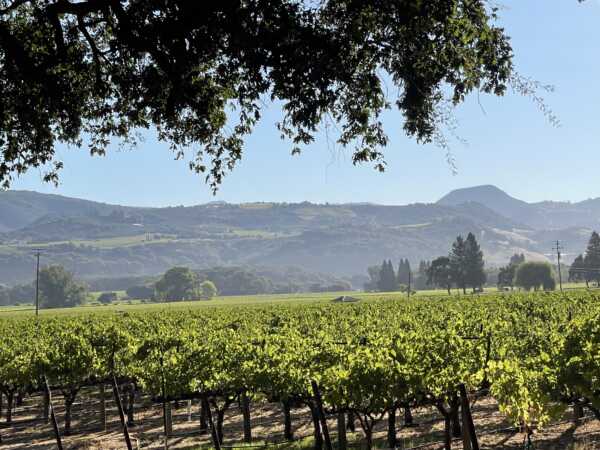
Here’s the thing about the vineyard: it doesn’t announce itself in any grand way. You pull up and it doesn’t look like anything more special than anything else around it. Valley floor. Rows of vines.
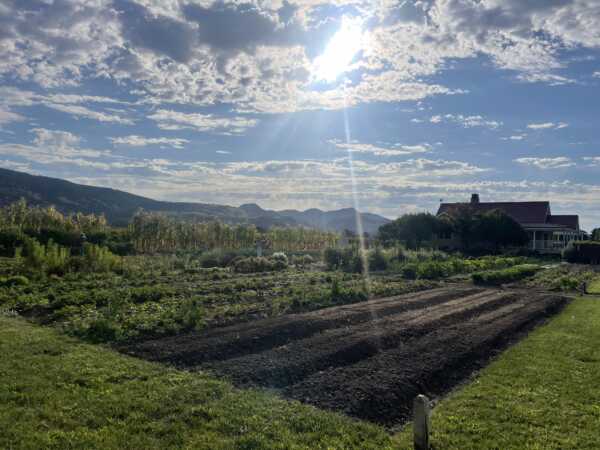
But you stand there a while and you start noticing the little details. As you enter you walk past a bountiful vegetable garden that is by no means commercial, but also much too elaborate to be for one person’s kitchen table. You find out the French Laundry uses it. Then you notice Conn Creek borders the west side of the vineyard, and the effect that creek had in shaping the soils over the ages: a complex patchwork of soil types, gravelly sandy loam in one area and finer clay in others. Plainspoken at first, but the longer I looked, the more I would see.
And then you take in where you actually are, the middle of the Napa Valley and everything that surrounds you, and the history of the ground under your feet. It all just kind of hits you at once.
This is the one.
A little history
If you look back at Napa’s heyday, you’ll hear about the Cabernet fanatics who lined up along the road on Silver Oak’s release day to collect their allocations. Among Silver Oak’s distinctive American-oak-aged Cabernets, the one they were all clamoring for carried the Bonny’s Vineyard designate. There was only ever a tiny amount of it, nowhere near enough for a crowd of people who lived their lives for Cabernet. The last vintage was 1991. The vineyard was simply too small to keep feeding a brand that size.
But Bonny’s Vineyard didn’t go anywhere. The vineyard that Silver Oak co-founder Justin Meyer planted for his wife Bonny stayed in the family even after the founders sold the winery. Walk into it today and it still looks like the family farm it has always been.
What we’ve made
We’ve been at Bonny’s for two years now, working different blocks each year. Not the original block by Justin and Bonny’s home, our friends at Argot have that one. Ours are elsewhere in the vineyard, and the two wines have come out genuinely different from each other. Two different blocks, from two very different vintages. An exploration. That’s the fun part.
The thing I’ve learned about making Cabernet is that you have to be gentle with it in the winery. You’d think thin-skinned Pinot is the one you handle with kid gloves. But it’s Cabernet, with tannins that have the potential to overpower the wine’s texture, that you have to be careful with when it comes to extraction.
Here’s what still surprises me. The 2024 Bonny’s is lower in alcohol than all of our 2024 Pinot Noir lots. We came in at 14.2%, and that’s after hanging it through the week-long heatwave in the first week of October that would have fried up Pinot Noir. As Justin from Argot put it to me at the time: “Cab is a tank.”
I won’t pretend I’ve figured Cabernet out. I’ve made Pinot Noir for almost twenty years and I know what I think about it. I haven’t established that here. No house style yet, no set of preferences I’d defend. This is like starting all over again, with an open mind and a lot of curiosity. It’s new, and it’s exciting.
Thirty cases
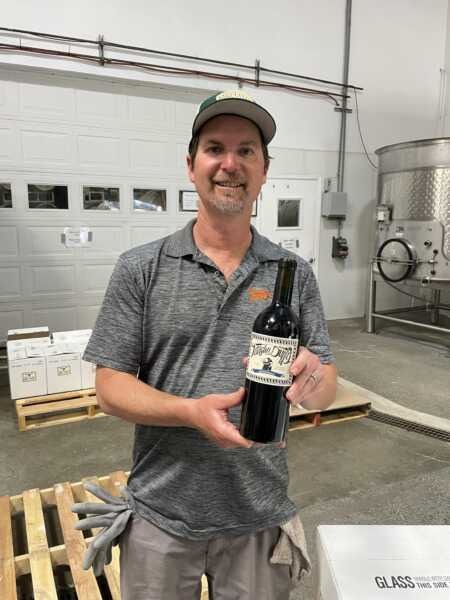
Thirty cases is what we have. Three hundred and sixty bottles, aged in barrel for 22 months before bottling this summer. A couple of weeks ago the bottles were waxed by hand, one at a time, by my son and his friends in our cellar.
What I want you to feel when you open one is history and time. This site is as important as any in the history of Napa Valley, tied to a place and a moment when people were vibing hard on California wine. When the industry here, and wine culture in this country, was being born. The industry is evolving into another phase now. But this vineyard remains, and I’m glad to be part of its next chapter.
There’s more coming. Two barrels of the 2025 are still aging, and we harvest the 2026 in a few short weeks. So there will be more eventually. But this is the first one, and there’s only ever going to be one first one.
Club members get it first.
How it tastes
Our inaugural vintage of Bonny’s Cabernet has turned out like a dream. It expresses classic Cabernet flavors in their purest form. The aromatics carry blackberry, ripe plum, cedar, violets and licorice. On the palate it’s absolutely vibrant, with black cherry, vanilla and bittersweet cacao nibs. Fine-grained tannins on the finish will reward cellaring. Those smooth tannins linger with rich chocolate-covered cherries and cassis.
The wine aged 22 months in two new French oak barrels and was bottled unfined and unfiltered on July 20, 2026. 14.2% alcohol.