
A Closer Look at Place
Our 2024 Petaluma Gap Pinot Noirs
When people ask what most shapes a wine, there are a lot of good answers. Vintage. Farming. Winemaking choices. Time.
But if you spend enough years walking vineyards and tasting fruit from different sites, you start to realize that place is the thread that runs through everything. That’s why we’ve chosen to begin our 2026 releases with the Petaluma Gap. Not because it’s trendy. Not because it sounds good on a label. But because it’s a place that, year after year, gives us Pinot Noir with a clear voice.
Why the Petaluma Gap
The Petaluma Gap sits in a natural corridor that funnels cool air and wind from the Pacific Ocean inland. Those steady winds slow ripening, thicken grape skins, and stretch the growing season. The result is Pinot Noir that tends to show:
- Bright, focused acidity
- Layered aromatics and fruit complexity
- Structure without heaviness
In practical terms, these are wines that feel energetic and precise. They’re expressive without being loud. Complex without being bulky.
For me, that balance is what makes Pinot Noir compelling.
What Vineyard Expression Really Means
When we talk about “vineyard expression,” we’re talking about the idea that a site leaves a fingerprint on the wine.
Two vineyards planted to the same clone, farmed similarly, and harvested in the same vintage can still produce very different wines. Soil composition, exposure, elevation, wind patterns, and proximity to the coast all play a role.
Our job in the cellar is not to override those differences. It’s to stay out of the way as much as possible and let the site show itself.
That means gentle extraction, thoughtful use of oak, and a focus on balance rather than force.
Four Wines, One Region, Four Perspectives
For our Winter 2026 Release, we’re introducing four Pinot Noirs from the Petaluma Gap. While they share a common regional character, each vineyard brings its own nuance.
Check out the lineup to learn more about the range of expressions.
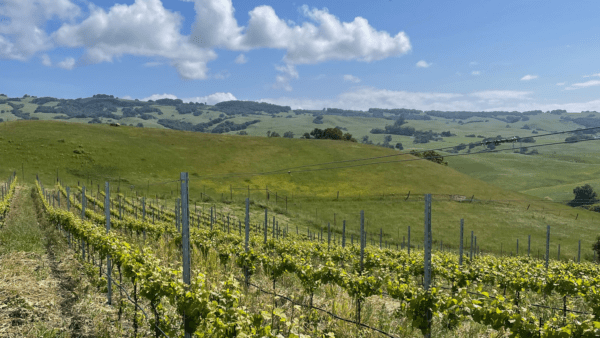
The Energy of the Coast
2024 Petaluma Gap Pinot Noir (AVA Blend)
The Petaluma Gap is defined by wind.
This AVA was established in 2018 and takes its name from the wind corridor that runs from Bodega Bay through the Petaluma Valley and out toward San Pablo Bay. That steady marine influence moderates daytime temperatures, promotes lower yields, and allows for longer hang time.
Our 2024 Petaluma Gap Pinot Noir is a blend of fruit from Sangiacomo’s Roberts Road Vineyard (50%), Ueberroth Vineyard (37%), and a small portion from Bacigalupi Vineyards (13%) in the Russian River Valley. The clonal mix is mostly Pommard clone, followed by 115, 777 and the Wente selection from Bacigalupi.
Working with multiple vineyards allows us to build a wine that reflects the broader character of the Gap rather than a single snapshot.
In the glass, that often shows up as:
- Bright, lifted aromatics
- Fresh, focused acidity
- Tension and drive
- A sense of lightness without being thin
Our 2024 Petaluma Gap Pinot Noir shows aromas of rose petals and pencil shavings lead to concentrated flavors of strawberries and ripe blackberries, with bright acidity and soft tannins carrying through a long, lingering finish.
The wine was aged for 10 months in French oak (50% new) and bottled unfined and unfiltered.
For people who gravitate toward brightness, edge, and clarity, our Petaluma Gap Pinot Noir is often where they land.
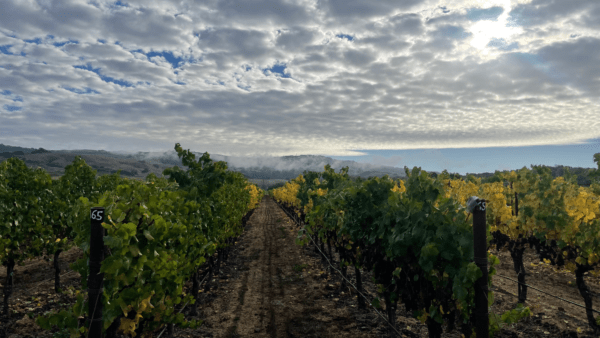
The Pull of Classic Farming
2024 Sangiacomo Vineyard Pinot Noir (Single Vineyard)
The Sangiacomo family has been growing grapes in Sonoma County for more than a century, and few of their sites are more prized than Roberts Road Vineyard, which has produced standout Pinot Noir for decades.
Roberts Road sits on the northeast plains of the Petaluma Gap and is surrounded by hills on three sides. This tucked-in valley holds fog longer and stays extremely cool, while also being shielded from heat coming from warmer areas in Sonoma County.
In 2024, Roberts Road was our last Pinot Noir picked, with harvest on September 30 for Pommard and October 4 for clone 777. The final blend is an equal portion of each clone.
Because this wine comes from a single vineyard, it offers a more focused snapshot of place.
You’ll typically find:
- Darker-toned fruit
- Broader mid-palate weight
- Subtle spice and savory notes
- Structure that supports aging
The wine shows aromas of black cherry, potpourri, and graphite lead into flavors of ripe plum and raspberry ganache, finishing with a cranberry-laced brightness. The wine was aged 10 months in French oak (33% new) and bottled unfined and unfiltered.
For people who enjoy Pinot with more structure and a classic profile, Sangiacomo often resonates.
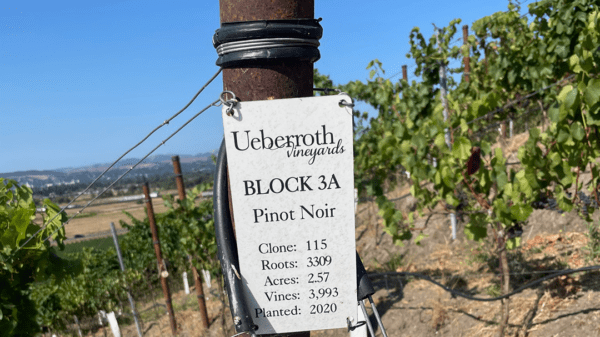
Structure, Earth, and Longevity
2024 Ueberroth Vineyard Pinot Noir (Single Vineyard)
Ueberroth Vineyard is located in the Petaluma Gap AVA and was established in 2020 by Keri Ueberroth. After farming an old-vine Zinfandel vineyard in Paso Robles for more than two decades, she set her sights on a new frontier and planted this western-facing hillside to Pinot Noir and Chardonnay. We’re sure glad she did!
The site is organically farmed, planted across multiple soil types, and exposed to the wind and marine influence that defines the Petaluma Gap AVA.
This is our second vintage working with Ueberroth, and we’re sourcing fruit from two blocks: clone 115 and Pommard, with a small addition of clone 2A from Baer Vineyard in the Russian River Valley in the final blend.
What stands out to me about this wine is its sense of structure.
It shows earthy and spicy tones layered with black cherry and plum, with an impressive mid-palate that suggests real aging potential. The wine was aged 10 months in French oak (33% new) and bottled unfined and unfiltered.
This is a Pinot Noir built to last. It isn’t in a hurry, and it doesn’t need to be.
For collectors and people who enjoy watching wines evolve, Ueberroth tends to resonate.
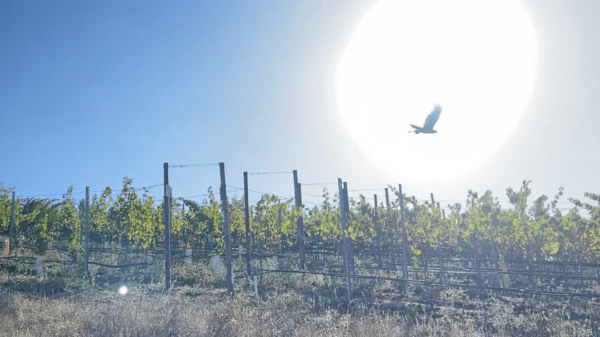
Plush, Expressive, and Immediately Compelling
2024 Secret Hill Pinot Noir (Single Vineyard)
Secret Hill came into our lives in the late summer of 2024.
It’s a vineyard we had driven past countless times in the Petaluma Gap but had never seen. A friend had recently purchased the property and invited us up for a look. When we pulled in, curiosity took over.
Hidden half a mile up a rolling hill off Adobe Road, the vineyard unfolds across multiple slopes and aspects and is planted to four Pinot Noir clones: Pommard, 828, 23, and 459. Our 2024 blend leans heavily on clone 23 (50%) and clone 459 (40%), with a small portion of Pommard.
This is our first release from Secret Hill, and it immediately showed a different personality than our other Petaluma Gap vineyards.
The wine is accessible in its youth, with plush textures and a fruit-forward style. Aromas lean spicy and floral, leading into classic Petaluma Gap red and purple fruits. Strawberries meet plums, with a layer of damp earth underneath.
Aged 10 months in French oak (55% new), this is a Pinot Noir that can be enjoyed right away, even though it still has plenty of depth.
Why This Matters to Us
This contrast is exactly why we’re structuring releases around place in 2026.
When wines are released with context, it becomes easier to see the bigger picture. Easier to understand not just what a wine tastes like, but why it tastes that way.
Coastal energy.
Classic roots.
Four expressions of the same vintage.
The 2024 Petaluma Gap Pinot Noirs are our opening chapter. We’re excited to share them with you.